Limited Founding AccessProposed offer
Your body. Your world.
One pair of glasses.
Theora is agentic health glasses in development. Health sensing, everyday context and a personal AI agent—together.
—Checking founder availability…
Limited to 200 initial founder places. Founder order is recorded when email verification completes, with existing priority places preserved.
3 months of included cloud
Invite 2 friends
1 month of included cloud
Invite 1 friend
200 initial founder places. Cloud access starts when delivered glasses are activated. Recipients keep their allocated glasses. Invitations let friends apply; approval and glasses are not guaranteed. Referred recipients receive 1 cloud month and cannot issue cohort invitations.
Shipping is targeted for 2027. Devices are not available for immediate delivery. Applying or receiving an invitation does not guarantee a pair. If selected for a hardware allocation, we’ll contact you later to confirm eligibility and request your shipping address.
Putting a screen on your face
is the easy part.
Reading your body from it is not.
Every other frame on the market is a display looking out. Theora is a sensor looking in, which is the harder half: holding a clean pulse against bone, all day, on a face that moves and sweats and talks. That is not a first attempt.
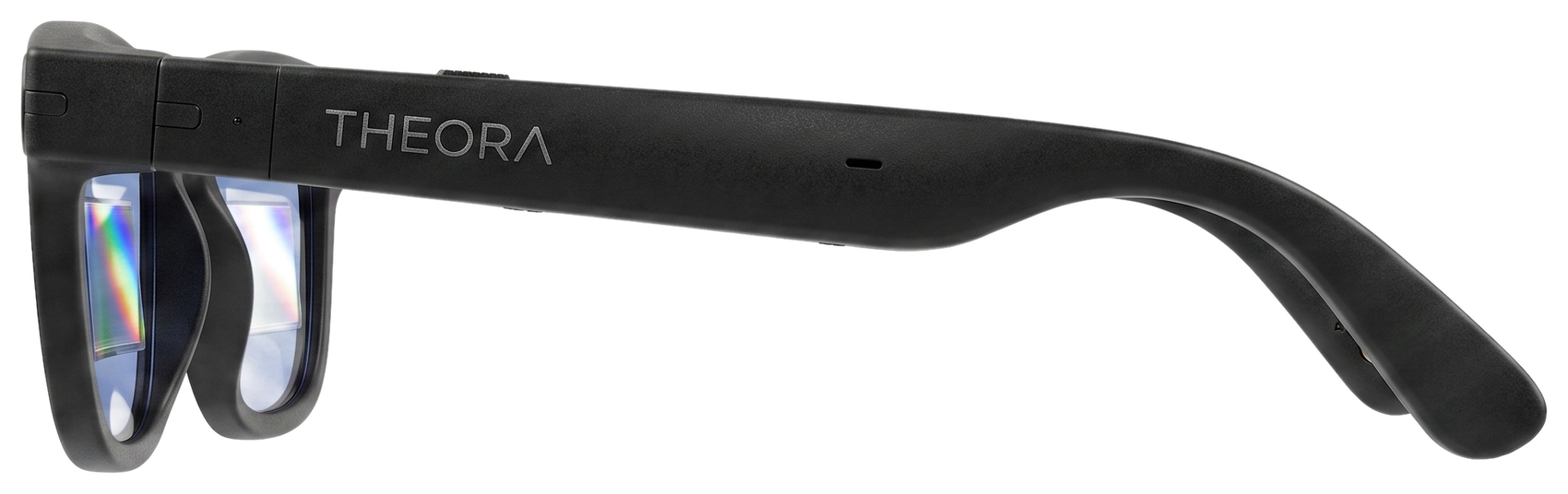
The one thing we will not claim is that the frame is finished. It still has EVT, DVT and PVT ahead of it, and those dates are set on supplier nomination. What is already real is the team behind it and the hundred alpha units already shipped while we get there.
You wake up already
knowing.
Play it. The panel follows the film, every reading that appears in his lens, and why it appeared at all. Jump between moments with the markers.
And this is the night it scored.
The whole eight hours, from a sensor that never left your face. Drag across it.
It sees what you see.
It hears what you hear.
Not an assistant you summon. One camera at eye level, a Five-mic array, and a waveguide that answers back into one eye, running while you go about your day and feeding one agent that already knows what your week looks like. The recording is not the point. The point is that you stop having to be the one who remembers.
What you were looking at
The shelf you were standing in front of when you said you were out of it. The label on the bottle. The receipt you never photographed, because you did not have to.
What you were told
The date somebody gave you in a corridor. The name of the person who introduced themselves while your hands were full. The address said once, quickly, in a car.
Where it happened
Context attached to a place rather than a time, so a reminder can surface at the door of the shop instead of at nine on a Tuesday when it is no use to anyone.
And then it acts on it
This is where FERAL takes over: the calendar entry you did not type, the note filed against the right person, the message drafted before you have sat down.
What it sees and hears is handled by FERAL on your own hardware. It is not uploaded to train a model and it is not sold. FERAL is open source under Apache 2.0, public on GitHub, so that is a claim you can read rather than one you have to believe.
It does not show you numbers.
It does something about them.
Five moments from a single Tuesday. Every glowing point is something Theora noticed on its own, click one to see what appeared in the lens, and what it did about it.
Playing by itself. Move your cursor across the frame to take over, hover to find a point, click to open it.
Nothing selected yet. Click one of the glowing points on the left to see what Theora put in front of your eye, and the action it took without being asked.
The glasses are the sensor.
FERAL is what makes them
worth wearing.
Without it these are a camera and a pulse reader. FERAL is the private, local-first agent that turns those signals into something that acts, and the longer you wear the glasses, the better it gets. Step around the loop.
Founding Access is cloud-first. The local-agent direction below is not a promise that these features work on allocated glasses without cloud. We will confirm supported functions and device requirements before allocation acceptance.
It runs on your phone, not ours
Local-first by design. Your body data and everything the agent remembers stay on your own devices. Nothing is uploaded by default, nothing is sold, and there is no advertising model on the other end of it.
You can read the code
FERAL is open source under Apache 2.0, public on GitHub. A privacy promise you can check is worth more than one you have to believe.
Every action is gated by policy
It can suggest moving your calendar, ordering your regular, or calling someone. It never does any of it without your say-so, and you set the boundaries once rather than approving forever.
Every sensor is a node
New capabilities register over one protocol instead of forcing a rebuild. That is how the retina and blood-pressure work reaches you later without replacing what you already own.
Stand in a real street
and look for yourself.
A full 360° viewer, right here. Drag to turn your head, and every readout stays pinned to the thing that earned it. Press Full screen to fill the display.
A plaza in San Francisco. Drag to turn your head. Every readout is pinned to a real thing in it, and slides out of view when you look away, exactly as it would through the lens.
Click any point below and it turns to face it. Or drag to look around and click the rings yourself.
Look around and click one of the glowing points. Each one is something Theora noticed by itself, with the reason it appeared and what FERAL wrote down or pulled back out.
Every readout is anchored to something
A step nudge belongs on a staircase. A decibel reading belongs on the thing making the noise. A meeting belongs on the door you are walking toward. Floating body data over a random building is the tell that a demo was faked, so nothing here appears anywhere it could not be earned by what is actually in front of you.
What to shoot for the real thing
One 360° still per location, taken at eye height with any consumer 360 camera, plus a note of what is worth pointing at in each. The HUD is drawn in the browser, so the readouts can change without a reshoot, but the anchor points have to be chosen by someone who looked at the frame.
He was working.
It told him to call his son.
A father at his desk. A reading that did not look right. One line in his vision at the moment it mattered, and he did not open an app, check a dashboard, or go looking for it.
You have seen the first nine seconds.
The whole thing comes with our next announcement. Explore Founding Access and be there from the beginning.
Nothing here needed a phone
The prompt arrived where he was already looking, and acting on it was two words. That is the difference between a device that reports and one that does something.
This is what agentic actually means
Not a chatbot on your face. Something that has watched long enough to know what normal looks like for the people you care about, notices when it slips, and does the one useful thing about it.
Read the rest
at your own pace.
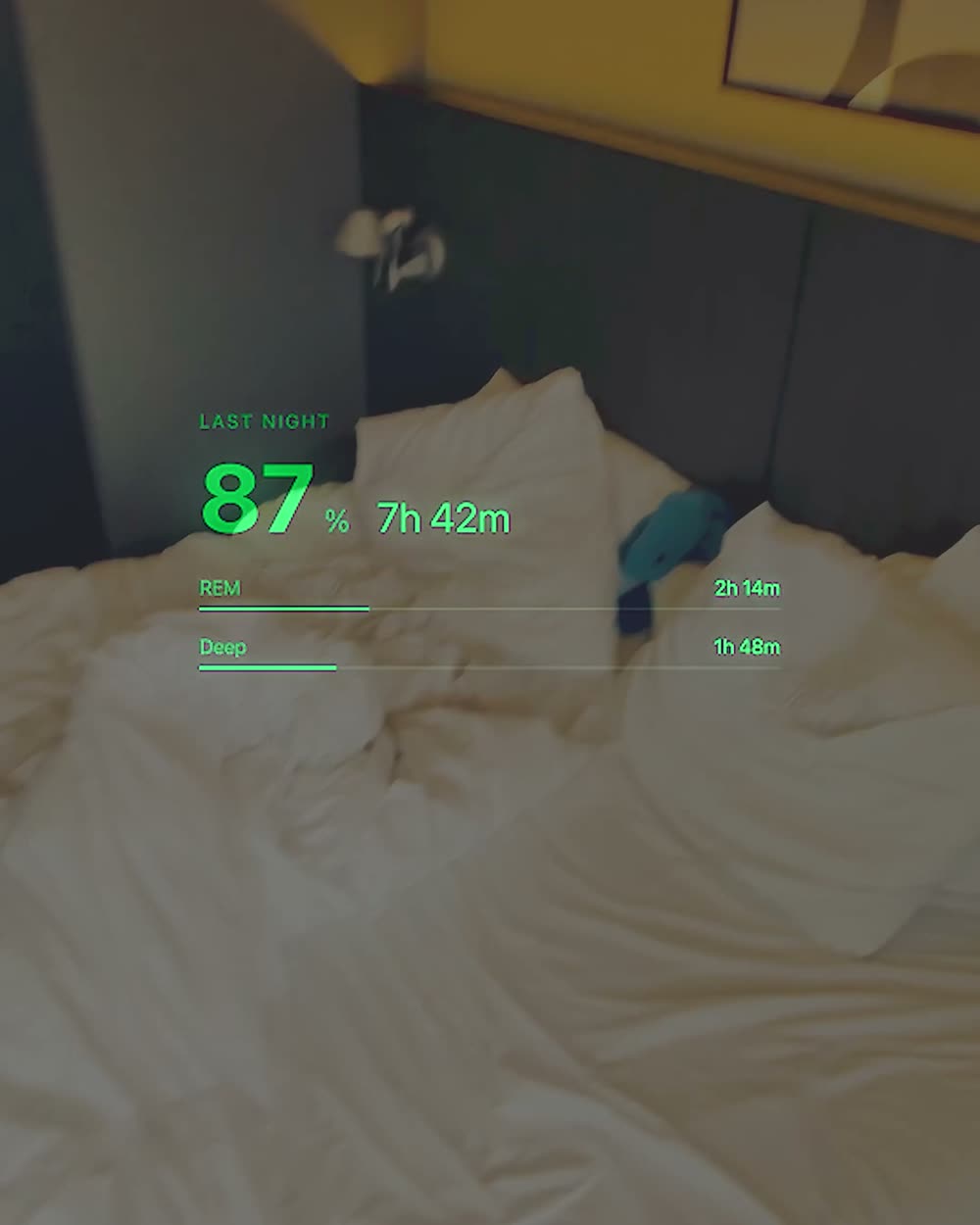 Health
Why the temple, not the wrist
Heart rate, blood oxygen, sleep and daylight, read from a sensor that sits still against bone all day.
Read it →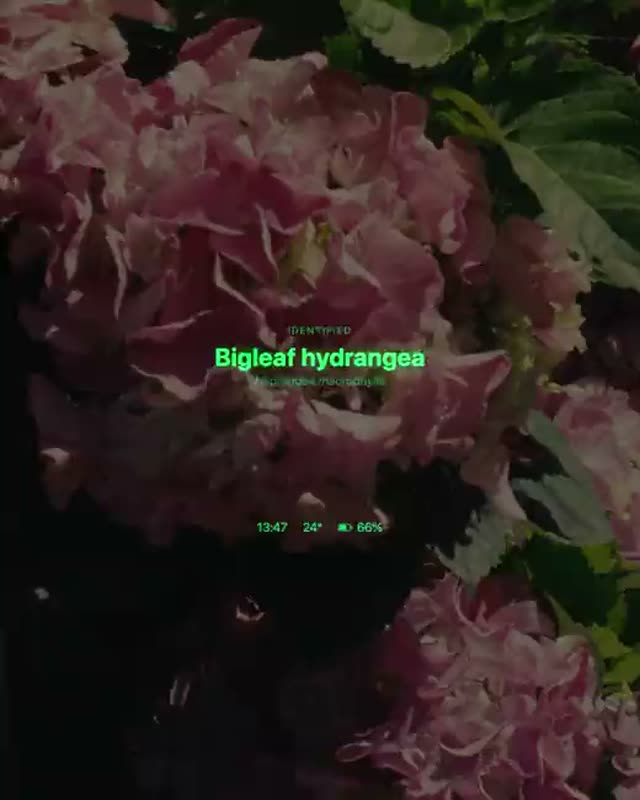 Technology
Four rules we do not break
A single green channel projected into one eye, and why every frame we publish obeys the same optics the hardware does.
How it works →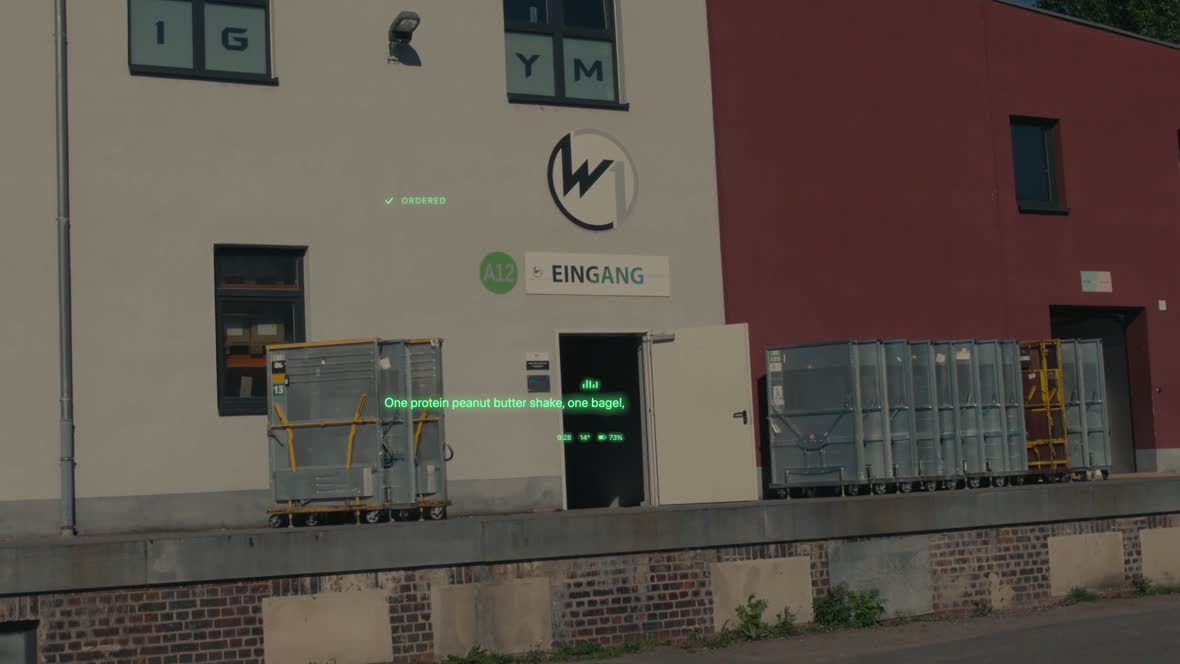 About
About
Who is building it
A hardware lead who has taken AR headsets to production before, optics advice from an endowed chair, and a manufacturer who already builds waveguide eyewear at volume.
Meet them →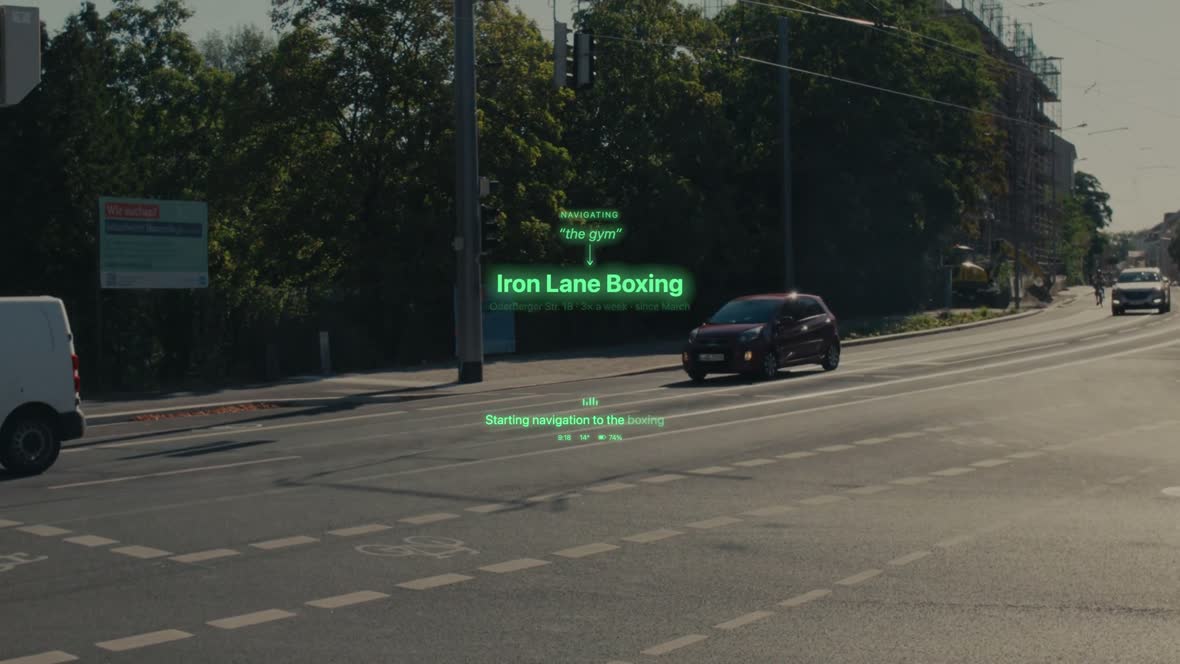 Agentic
What it actually does for you
Explore a whole day, then take the walk and watch what FERAL writes down and pulls back out.
Try it →Questions
The things people ask before joining.
Something we have not covered? Email info@theora.io.
What is Theora?
Theora is agentic health glasses in development: health sensing, everyday context, communication and a personal AI agent with permission. Program availability and supported functions are confirmed separately from application or approval.
How is this different from a smartwatch or fitness band?
A wristband tracks and reports; you go looking for the data. Theora sits at eye level, so it also sees and hears your context, and FERAL acts on it in the moment without being prompted. It orchestrates your glasses, phone and the devices around you rather than filling in another chart.
What does Founding Access include?
There are 200 initial approved founder places. First 100: three months of cloud and two cohort invitations each. Next 100: one month and one invitation each. Approved referred recipients: one month and no further cohort invitations. Included cloud begins at activation of delivered, allocated glasses. Recipients keep their allocated glasses. Approval is separate from hardware allocation. After the trial, a separately chosen $30/month cloud plan is proposed; no automatic charges.
Shipping is targeted for 2027 and depends on production, availability, certification and funding. Applying or receiving an invitation does not guarantee a pair.
What remains without paid cloud?
You keep your allocated glasses. We have not confirmed a feature list for use without a paid cloud plan. We will provide the verified device and software requirements before you accept a hardware allocation. No offline AI or integration is promised here.
Is this program cloud-first?
Yes. This Founding Access program is cloud-first. A supported local/computer feature list for this configuration has not been confirmed. No offline AI or integration is promised here; requirements will be provided before allocation acceptance. Existing paid-reservation rights remain unchanged.
Has anyone actually worn Theora?
Yes. We have shipped about 100 v1 alpha units, an earlier build sold at cost to alpha testers. Wear is self-reported by alpha testers in an August 2026 survey. Temple sensing has been exercised daily on those wearers; that build is not the one that ships.
What sensors are in the frame?
The frame ships with a 6-axis IMU, One camera, five microphones and a waveguide HUD, all a 50 gram target. Temple wellness modules add heart rate, SpO₂, skin temperature and UV sensing, with blink and gaze joining the suite over time. Full detail is on the technology page.
Is Theora a medical device?
No. Theora is a general wellness product and is not intended to diagnose, treat, cure or prevent any disease. The sensors measure heart rate and heart rate variability, blood oxygen, skin temperature and UV exposure. They report those measurements and trends in them. They do not screen for, detect or diagnose any condition.
When will glasses ship?
Shipping is targeted for 2027. Devices are not available for immediate delivery. Applying or receiving an invitation does not guarantee a pair. If selected for a hardware allocation, we’ll contact you later to confirm eligibility and request your shipping address. Production, availability, certification and funding remain conditions.
Can I change the lenses?
Yes. Theora Lite ships as everyday eyewear with swappable sun and anti-blue-light lenses, and comes in two finishes, graphite black and sand beige.
Still stuck? Email info@theora.io.
Be there from
the beginning.
—Checking founder availability…
Limited to 200 initial founder places.
200 initial approved founder places. Ranks 1–100: 3 cloud months and 2 cohort invitations each. Ranks 101–200: 1 month and 1 invitation each. Referred recipients: 1 month and no further cohort invitations.
Apply for Founding AccessUp to 500 potential participants. Recipients keep separately allocated glasses. Cloud starts at activation; no automatic charges.
Shipping is targeted for 2027. Devices are not available for immediate delivery. Applying or receiving an invitation does not guarantee a pair. If selected for a hardware allocation, we’ll contact you later to confirm eligibility and request your shipping address.


